Thursday, February 1, 2018

Developing Cultural Competence Through Art (M5U5A2)

Multiculturalism and Diversity in a Classroom

The international framework of education is shifting and global standards are unfolding inside classrooms in order to foster inclusion, development of cultural competence, and strengthen communities and countries. It is important to bring multi-cultural content into each subject based on that subject in order to deepen student’s ability to relate and include multi-perspectives into their blossoming human repertoire as adults of the future.

The platform of teaching can help elevate student’s awareness of the diverse community and world they live in so they can have a wide spectrum of perspectives and tolerance. A teacher can incorporate multicultural content and foster multiple perspectives in all lessons.
Lessons in the art field and subject can reflect not just the diversity of the community and country, but local influences on the global art world. Japanese art as a whole has influenced specific famous artists such as Gustav Klimt and Vincent Van Gogh.  These European painters were pioneers and influenced our appreciation of art and culture today.
EXAMPLE:
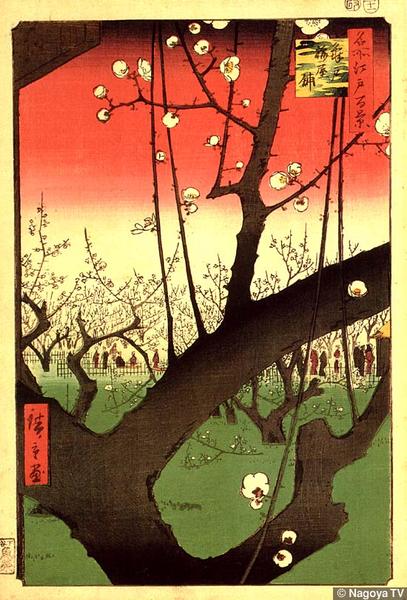
Image result for plum blossom hiroshige   Flowering Plum Blossom by Hiroshige 1797, Japan      Related imageVincent Van Gogh Flowering Plum Blossom 1887, France

Art unites people and places. For example, many of Vincent Van Gogh’s paintings have traditional ‘Ukiyo-e’ woodblock images from Japanese artists such as Hiroshige and Hokusai. These Japanese artists showed life in rural Japan, their communities and regional activities. The woodblock prints were cheaper then, and simply captured daily rituals and traditional habits, clothing and duties. When European artists saw these images, they found them inspiring and interesting. With the advent of WWI, art became more valuable; holding images of this era in a time-bound continuum.

In the Honolulu Museum, there are over 10,000 woodblock prints from Japanese masters like Utamaro and Hokusai. After WW1 and then Hiroshima, the art ended up in America. The point is that Art is part of our cross-cultural heritage as a human race, and as events around the globe happen, art is steered by those events and becomes a symbol uniting us through difficult times by a golden thread called art nostalgia.

Students’ cultural competence will be developed through activities that include research, presentations, and debate. Students will investigate and report on any of the following topics related to art and multicultural perspectives and influences, even fusion of art movements from different chronological timelines.

Choice of study research projects:
1. Identify and construct a plan of artistic chronology where different countries artists influenced another countries artists. Show evidence as to why and how that happened.
2. Build a timeline showing the trajectory of Chinese art influence over Japan, starting with Okinawa. Debate the differences and express some positive results of these influences.
3. How does art influence culture and society. How is art reflected in society?
4. How does art influence the architecture of a country? Show examples over the ages starting with the Romans. How did they influence other parts of the world.
5. Choose your own topic ( must be approved by the teacher)

Assessments will be done formatively as the students research their topic and take notes in their notebook. Comprising data in the WH5 (who, what, where, when, why, how). Also, cross-examining each other’s work with rotational 5 – 10 minute walk-arounds, changing partners. (student-centered activity) Teacher observes the students interacting, presenting to each other, and asking questions to show listening skills and understanding. A written essay and a project-board will be given for the purpose of visual presentation final report.

References

Encyclopedia of Art History. What is Japonism? Retrieved February 3rd 2018 from: http://www.visual-arts-cork.com/history-of-art/japonism.htm



Sunday, January 21, 2018

I.D. for D.I.

Identifying Differentiated Learners through Differentiated Instruction


A quality curriculum can deepen the level of learning for all students. The content of the lesson must be concretely identified in order for a process to be established using clear objectives. This leads to product, such as assessments in the form of presentations, written essays and tests to name a few.

In order to attain the objectives of the lesson, checking for student understanding using formative assessments is key. Formative assessments measure the level and status of the students so teachers can meet them where they are in the activity.

Once the learners needs are identified, I must find ways to change the activity for the benefit of the student. The highest learning potential of the student must be assessed. New strategies and resources can be introduced to seamlessly and naturally raise the differentiated learner to the rest of the class.

LINK to flowchart:
https://drive.google.com/drive/u/1/my-drive


This can involve adjusting:
  • Content  I use media and other methods to impart and instruct skills, ideas and information to students who need differentiated instruction.
    EXAMPLE matching new vocabulary to definitions.
    watch a video of charcoal application onto paper and see the pressure needed to make various lines.
    observe the step-by-step of my power point presentation so they can understand what is expected.
  • Processes  The exercises and practices students perform to better understand content
    EXAMPLE I would provide one-on-one practice, especially for the kinesthetic learners who need interactive help.
    -auditory learners can listen to my voice, while sensory processing disorder students can watch me do the activity.
  • Products  The materials, such as tests and projects, students complete to demonstrate understanding
    EXAMPLE  auditory learners give an oral report, ADHD students can give a presentation one-on-one 
https://www.prodigygame.com/blog/differentiated-instruction-strategies-examples-download/

Assessment Fog

   
Assessment Fog is something that every good teacher can experience when it comes to assessing differentiated learners. You have to be looking for it to notice it, otherwise students can fall through your fingers and get lost in class. 

  • Use the academic criteria list as a filter to align all assessment strategies such as observations and rubrics.
  • Coach students to understand what is expected of them. Get student feedback about what they "think" are the expectations.
  • Unpack curriculum and standards into "I can" statements. This process helps to evaluate clarity of assessment tools to the academic outcome.
  • Use a Learning From Student Work protocol with colleagues to reflect and revise assessment tools. When used during team and staff meetings, it helps clear assessment fog regarding intended academic outcomes and how students may interpret expectations.   *https://www.edutopia.org/blog/differentiated-instruction-eliminating-assessment-fog-john-mccarthy
screencasting......

3. Provide Students with Different Options to Demonstrate Their Learning


  • Watching a video
  • Creating artwork
  • Reading an article
  • Completing puzzles
  • Listening to you teach


Flexibility and adaptability in the 21st century classroom

Being a flexible teacher, prepared at all times to adapt learning strategies to diversity of classroom and Differentiated Learning is the 21st century pinnacle of successful instruction I think.

In my classroom, which is Grade 6 to Junior High, I IDENTIFY, ANTICIPATE and EVALUATE using various differentiated strategies to meet the needs of the student. This ensures that the student can access the content being taught. For me, this is the key. 

With CONTENT, I make sure to have examples of the objective in at least 3 formatted ways. One is physical example of what the objective is. In this case, it is drawing with charcoal on a paper to create light and shadow. I use technology to demonstrate examples of what is a still life. I ask students to answer "What is a still life?" and I ask them to define it among their peers. They need a solid grasp of content and what they are asked ot perform in order to PROCESS and create a PRODUCT for evaluation.

One size does not fit all, so I customize my classroom. I create an ENVIRONMENT of inclusion and team efforts. Each objective is geared towards an individual product, however, to get there, you must work together, helping each other, as a team, to have an individual piece that is successful. The PROCESS of the PRODUCT is one of the juiciest parts of my classroom. 

Some students have needs such as SENSORY PROCESSING DISORDER and LOW MOTOR SKILLS. This makes it difficult for the to get a final product out successfully. Especially a final product that matches the criteria. Hence, I create the conditions and modify elements of the environment to give them breadth. An EXAMPLE of this could simply be making sure that they have extra space on their table to work and that all the materials they need are physically already laid out for them so they don't get flustered searching them out among the complex structures of a classroom and diversity of peers.


References:

*McCarthy John, 2014. Three Guidelines to Eliminating Assessment Fog.  Retrieved from:  https://www.edutopia.org/blog/differentiated-instruction-eliminating-assessment-fog-john-mccarthy

Differentiated Instruction Strategies that Promote Student Learning.  January 22 2018, retrieved from: http://differentiated-instruction.wiki.inghamisd.org/

Guido, M. October 12, 2016. Game-based Learning, Teaching strategies. Retrieved from: https://www.prodigygame.com/blog/differentiated-instruction-strategies-examples-download/


Monday, January 15, 2018

Formative and Summative assessments: Thinking Like an Assessor

STANDARD: Write an art critique identifying and explaining the use of the elements and principles of art in the Sunflower painting by Vincent Van Gogh.

Objective: Students will be able to write a three paragraph art critique using specialized words in order to evaluate Vincent Van Gogh’s painting The Sunflowers by articulating their understanding of this work of art.
Formative assessment
A formative assessment monitors a students’ learning and provides an ongoing communication for them to get feedback from the instructor.
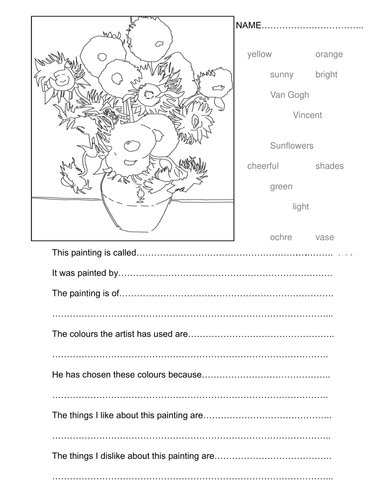
1. Students will fill out a one-page target worksheet identifying their strengths and weaknesses in trying to reproduce the Vincent Van Gogh painting Sunflowers. What was difficult and what did you find easy to do?
2. Students will draw up a concept map of the elements of art using the Sunflower as a template to demonstrate their understanding of the task.

Image result for art concept map
3. Informal checks for understanding with the three-minute pause.  Reflecting on ideas that have been introduced and making connections to prior knowledge for clarification.
I noticed….
I discovered that……….
I found or felt that………
I learnt that………
I compare this with………..
I do not agree with………..

Summative Performance-based assessment
A performance-based assessment measures students’ ability to apply the skills and knowledge learned from a unit. This task normally challenges students to use their higher-order thinking skills to create a product or finalize the process of an assignment (Chun 2010).
1. Students knowledge of Vincent Van Gogh’s ‘Sunflowers’ painting will be demonstrated in a three-paragraph art critique. This art critique will include a list of specialized words that should appear in the final report.
Show          demonstrate              make            construct                  composition            build           use
        Describe             colors         lines                      shape            space               value             texture
Movement             balance              harmony                   variety                emphasis          space     

2. Students will have a writing test to show how well they retrieve information about the topic data. The examination will be out of 100 and will have to be written without any spelling errors in a three-paragraph format of a critique.

References
Chun, M. (2010, March). “Taking teaching to performance task: linking pedagogical and assessment practices. (http://jcsites.juniata.edu/faculty/kruse/misc/Chun_Change_TakingTeachingToTask.pdf) Change: The Magazine of Higher Education.


Hilliard, P. (2015, December). Performance-based Assessment: Reviewing the Basics. (https://www.edutopia.org/blog/performance-based-assessment-reviewing-basics-patricia-hilliard) Performance Assessment.

Monday, January 8, 2018

Wednesday, December 27, 2017

Understanding and Applying Standards

Understanding and Applying Standards

Unpacking a standard and practicing backwards mapping related to the subject of Art in Junior High has helped me plan units better for my content area and grade level. Being able to understand standards helps me identify student proficiencies and develop instructional strategies to engage learners. Student’s meta-cognition is linked to performance outcomes and the ability of the teacher to reach learning objectives. By understanding the specifics of key elements desired from a standard, I can create goals and activities for students more clearly.

One of the keys to understand backwards mapping is seeing the entire learning process unfold. Once the learning activities are given, the students can learn as the teacher incrementally unpacks the standard. We as teachers, develop understanding by “extending and challenging understanding” (Wiggins, 2010). That means make students think independently and make room for errors.

The process of backwards mapping is a smart way of getting to see where the teacher can get the most and the best out of the students and where the students can get the most out of the lesson. The highest learning potential, utilizing comprehension, understanding and creativity, can be followed up by assessment activities such as tests and quizzes.

Project-based activities are good for assessing what the student has accumulated from the various teaching strategies that I implemented and activities from backwards planning. The point is to help students reach a higher level of thinking by evaluating, identifying and understanding concepts related to the standard. Wiggins says there are three different educational goals always at play: acquisition, meaning-making and transfer or prior learning (2010).

In my art class, I would have the big idea be “Art is life and life is art”. Then students would be faced with the question, “What does it mean to be human and what kind of humans would we be if art did not exist?”. I actually have had my students do a group activity and find at least three definitions and descriptions to what is art. I introduced them to theories by Lacan and other important historical figures who have tried to define art.

Teaching our students to remain opened and have an inquisitive mind is important. Giving them the chance to come up with big ideas, rather than learn definitions of things because of time restrain. Great teaching brings content to life. There is always room for new ideas because what we might take as fact today may be fallible tomorrow.

For example:

 “In evolution: keep remembering that the idea that mutations are random and that selection is “natural” means that there is no guiding purpose to life-form change. This is the part of the theory of evolution that is most controversial, not the idea of evolution per se” (Wiggins, 2010).

Learners have to be helped to construct understanding rather than be told what to think all the time for the purpose of efficiency.


References


Wiggins G. 2010. What is the Big Idea? Retrieved December 20 from: http://www.authenticeducation.org/ae_bigideas/article.lasso?artid=99

Friday, December 22, 2017

Standards and Backwards Mapping Based on the curriculum framework of the Japanese Art Education materials for junior high grade 7-9

Module 5-activity 2 Standards and Backwards Mapping
Based on the curriculum framework of the Japanese Art Education materials for junior high grade 7-9
Standard 1: Write an art critique identifying and explaining the use of the elements and principles of art in the Sunflower painting by Vincent Van Gogh.
What are the big ideas? (desired understandings and predictable misunderstandings)
Desired understanding: That students learn the elements and principles of art as they relate to a piece of art by Vincent Van Gogh.
Predictable misunderstanding: Students might had difficulty combining elements with principles of art to write a critique about art.
Proficiencies: the skill or expertise that the student has developed in understanding the elements and principles of art include :
1. application of elements and principles of art to Van Gogh's work of art 
2. application of elements and principles of art to their own and peer works of art
3. skill to describe, critique and discuss in this particular area of study— Art.
Backwards planning/ mapping:
1.     Students will watch a video on How to paint Van Gogh’s Sunflowers and Vincent Van Gogh. Then discuss in groups the points they thought were important to highlight from each video.
2.     An 'artist study' worksheet is given to write about the painter and his work of art.
3.     Students will present to their partners their artist study and read their opinions about the painting.
4.     In pairs, now students will identify and list the elements and the principles of art in the painting.
The pair will present how the painting works and/or does not work; what they like and dislike about the painting, and why.
5.     A mark will be given for presentations, based on English grammar, pronunciation and use of terms, eye contact and voice projection.
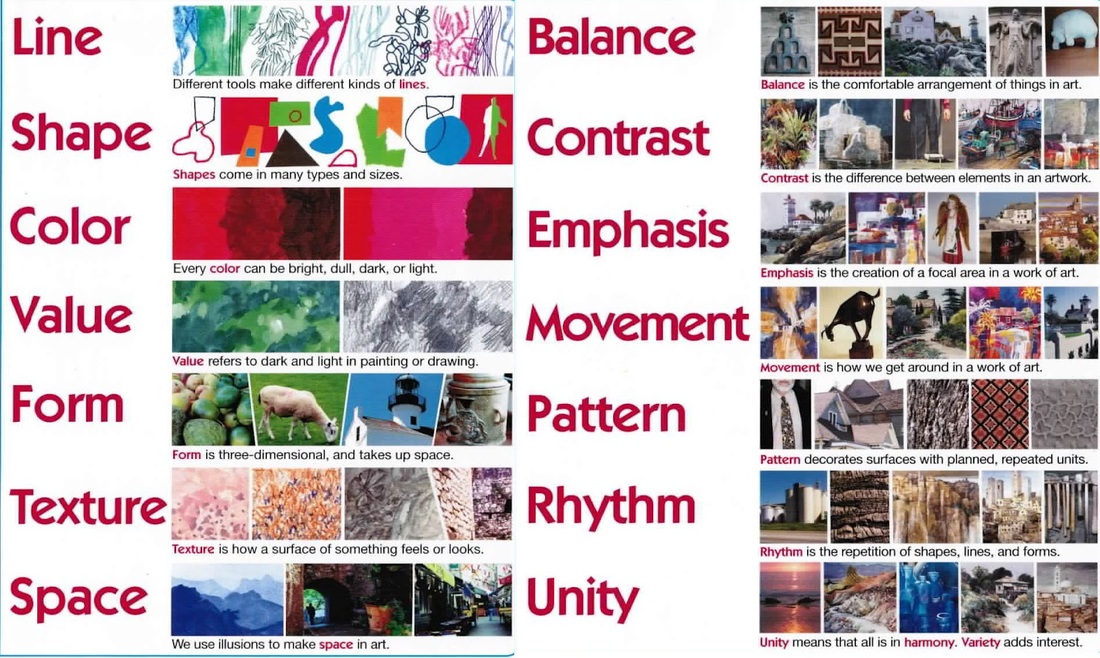
6.     A test on Van Gogh and his painting will be given to assess the proficiency of the students in the areas of; comprehension of the elements: line, form, space, shape, texture, value, and colour.  Also, the principles of art: balance, contrast, unity, movement, pattern, rhythm, and emphasis. Lastly, students will be expected to write and essay discussing how these play out in the Sunflower painting.
7.     Each student must reproduce the Sunflowers piece using a grid and their own sketchbooks. Assessments are based on whether they bring their materials to class, how well they use the grid system to make an accurate reproduction, and whether they adhere to the deadline of the assignment.
Finally, students will prepare individual power point presentations or loilonote presentations that they will share in class about what they understood from the assignments and activities so as to complete the standard.
Image result for van gogh worksheet
Image result for elements and principles of artImage result for elements and principles of artImage result for van gogh worksheetImage result for van gogh worksheetImage result for van gogh worksheetImage result for van gogh worksheetImage result for elements and principles of art worksheet

Wednesday, December 13, 2017

Applying Classroom Rules and Procedures (module 4, activity 3)


 Applying Classroom Rules and Procedures

It is easy to categorize, compartmentalize and judge; but do we as educators listen too?

There is a multiplex of real-life problems and issues students face as humans, people and members of a family. They have lives outside of school and face adversity in a world bombarded with news, tabloids and war images. When these people step inside an institution such as a school in this case, they become students. They get attributed as a label: student, learner, peer. 
Within the classroom, a teacher also has a label as educator, facilitator of knowledge and upholder of regulations, behaviors and laws. Upholding rules and procedures within a classroom can be daunting on a daily basis throughout an entire day with a multitude of students who vary in their personal capacities. Students first must understand consequences and rewards before applying the rules and procedures laid out before them.
For example, a rule would be "no whistling in the classroom" or "hang your library bag on the right side of your desk". In these scenarios, a teacher can look around the class and see which students are not listening to rules. Some teachers might use a digital tool to keep track of students ability to listen, such as Class Dojo. Other methods that work include magnets with names organized into two columns. One column for good listening, the other for 'listen again for instruction'.

If the teacher writes "bad listening" it may contribute to a student feeling bad about themselves or ostracized from the group. This might tempt other students to taunt them or single them out as bad. Some students try to gain points with the teacher by pointing out the faults of the student that the teacher singled out. This is low, but it happens often. I have personally experienced this in our school as an observer, and do not subscribe to singling out children among peers. 
A rewards chart on the wall that students contribute to is powerful. They give input to how to follow rules and procedures such as lining up correctly or walking down the hall politely and quietly is a good motivator. They can choose from the list at the end of the day. I make sure that by the end of the month, every student has gotten a chance to be rewarded, so they all can feel included. Consequences also happen but I start with noninvasive interventions such as the one on page 132 of The Art and Science of Teaching.
A positive reinforcement strategy as seen on page 132 of The Art and Science of Teaching says to "never let positive behavior go unnoticed. A teacher who thanks students for their cooperation in making the classroom a positive learning environment gets immediate respect. Not only that, positive behavior is contagious as is negative behavior.
A teacher should first optimize their own learning capacity about positive and negative consequences that are established. A failure to do this can be detrimental to learning (Marzano, p.134). If used correctly, consequences enhance student learning potential.

Teachers wear many hats and have many jobs. The ones mentioned above are important: to recognize and acknowledge, to note and establish, to understand, intervene and punish, but most importantly and finally, to listen.